The Future of Web Development: Our Predictions for 2026
by Rivera, Senior Developer
1. State of Development
As we approach the end of 2025, the software landscape looks radically different than it did just three years ago. The experimental chaos of 2022–2023 has calcified into new standards, shifting our focus from "what is possible" to "what is sustainable."
Here is our objective look at where the industry stands today and where we are heading in 2026.

Back in 2022, the launch of GitHub Copilot introduced the industry to the concept of AI-assisted coding. At the time, it was primarily a sophisticated autocomplete tool—a way to plumb Stack Overflow directly into the IDE.
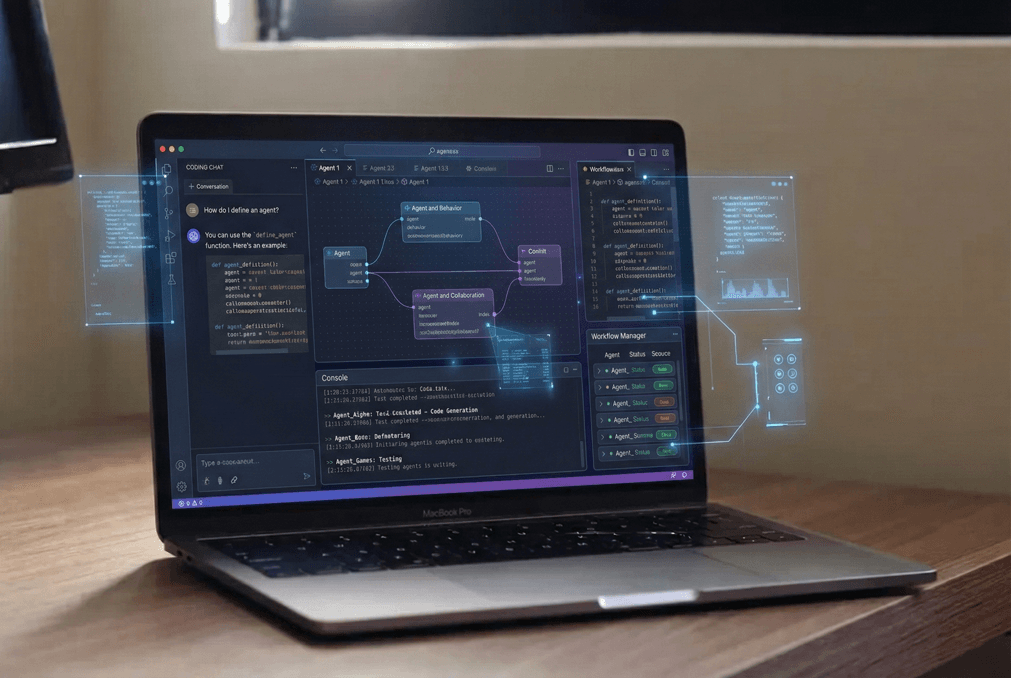
By late 2025, the novelty of "generative text" has faded, replaced by the utility of Agentic Workflows. We are no longer simply asking AI to write a function; we are assigning agents to scope, test, and refactor entire modules. The role of the software engineer has fundamentally shifted from syntax author to system architect and AI auditor.
The Outlook: Looking toward 2026, the challenge is no longer access to code generation, but managing "AI Debt"—the complexity generated by automated coding tools that human teams must eventually debug. We predict a surge in tooling focused not on creating code, but on provenance tracking and automated verification, ensuring that the speed of AI development doesn't outpace our ability to maintain security and stability.
2. Rendering Patterns
To server render or not to server render? In 2022 the owners of the internet, Vercel, decided that instead of making this choice once for your whole application, now you will need to decide every time you write a new component.

The debate of 2023—"to server render or not to server render"—has largely been resolved by the maturity of React Server Components (RSC) and the stabilization of frameworks like Next.js and Remix.
The complexity that once baffled developers—managing hydration boundaries and streaming protocols—has been abstracted away by improved compiler technology. We have moved past the initial friction of "granular choices" for every component. In 2025, the industry has standardized on Resumability and Partial Prerendering as defaults rather than optimizations.
The Outlook: The next frontier is no longer about how we render HTML, but where. We anticipate 2026 will bring a massive consolidation of "Edge" logic. The distinction between "frontend" and "backend" will continue to blur as frameworks adopt universal primitives that allow components to run seamlessly across browser, server, and edge without developer intervention.
3. JS Runtimes: The WinterCG Era
The "Runtime Wars" of the early 2020s—sparked by the introduction of Deno and Bun alongside Node.js—have cooled into a collaborative peace. Rather than agonizing over which runtime to choose, 2025 has been defined by Interoperability.
Thanks to the efforts of the WinterCG (Web-interoperable Runtimes Community Group), the specific runtime matters less than ever before. Standard APIs are now consistent across environments. The focus has shifted from raw execution speed (which is now negligible between major runtimes) to cold-start performance and security sandboxing at the edge.
The Outlook: In 2026, we expect the conversation to move beyond JavaScript runtimes entirely. With the integration of WebAssembly (Wasm) components becoming native to most JavaScript environments, we predict a rise in "Polyglot Runtimes," where TypeScript orchestration layers manage high-performance Rust or Go modules transparently. The future isn't just about serving HTML faster; it's about computing universally.
As the boundaries between runtimes dissolve and AI graduates from assistant to architect, 2026 promises a future where we stop merely coding the web and start truly orchestrating it.